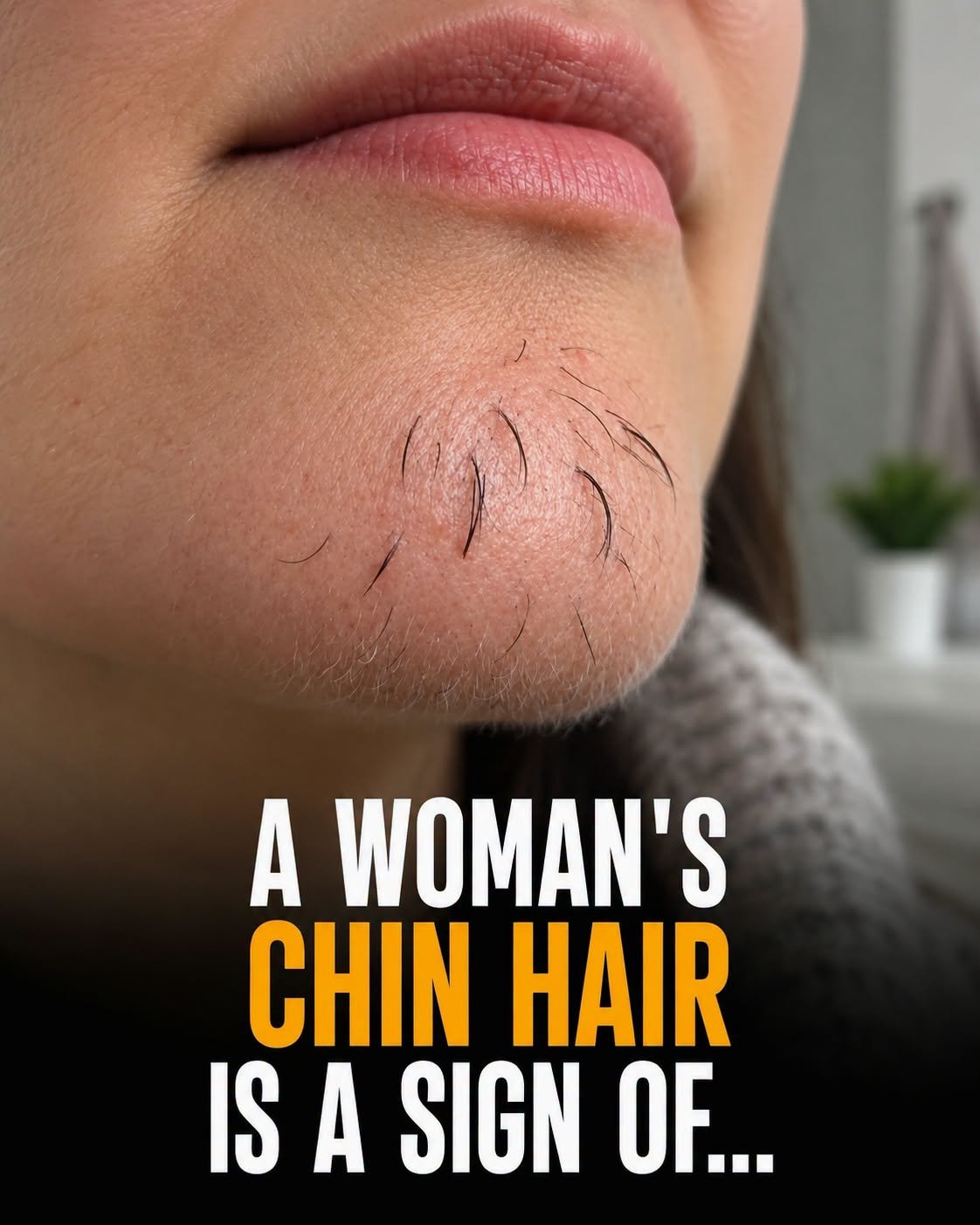
That stubborn chin hair can carry more meaning than embarrassment. For many women, a few stray hairs are simply the result of genetics and normal hormone fluctuations over time. Hair follicles that are more sensitive to androgens can produce darker, thicker hairs, especially around puberty, pregnancy, and menopause. In these cases, managing the hair with tweezing, waxing, or laser treatment is often a personal choice rather than a medical necessity.
But when facial hair becomes noticeably heavier or appears suddenly, it can be worth looking beyond the mirror. One possibility is hirsutism, a pattern of coarse, dark hair growth associated with increased androgen activity. Polycystic ovary syndrome (PCOS) is a common cause and may also come with irregular periods, acne, difficulty becoming pregnant, scalp hair thinning, or other signs of hormonal changes. Having chin hair alone, however, does not mean you have PCOS.
Medications can sometimes play a role as well. Certain drugs and hormone-containing products have been associated with increased unwanted hair growth, including testosterone, DHEA, minoxidil, and danazol. That’s why a sudden change is a good reason to review your medications and supplements with a healthcare professional rather than assuming it’s simply part of getting older.
The biggest clue is often how quickly the change happens and what accompanies it. A few hairs that appear gradually over several years are very different from rapidly increasing facial hair. If the growth becomes heavy or progresses over a few months—especially alongside a deeper voice, significant acne, scalp hair loss, increased muscle mass, or other signs of androgen excess—medical evaluation is recommended. Rarely, hormonal disorders involving the ovaries or adrenal glands can be responsible.
A doctor may ask about your menstrual cycle, medications, family history, weight changes, and other symptoms. Depending on what they find, blood tests such as hormone measurements may be used to look for an underlying cause. Not every woman with unwanted facial hair needs extensive testing, and treatment depends on the cause and on how much the hair bothers you.
If there is no underlying hormonal problem, you have plenty of options. Tweezing, shaving, waxing, and depilatory creams can provide temporary results. Laser hair removal and electrolysis offer longer-lasting reduction, while prescription treatments may be appropriate when excess androgen activity is contributing to the growth.
And one common myth is worth clearing up: shaving does not make facial hair grow back thicker or darker. It can simply feel rougher because the newly growing hair has a blunt tip.
So the next time you discover that one stubborn hair under your chin, don’t panic—and don’t automatically dismiss it either. A single coarse hair is usually just a single coarse hair. But a sudden increase, rapidly changing pattern, or combination of new symptoms deserves attention.
Your chin hair isn’t a diagnosis. Sometimes it’s nothing more than genetics and time. Sometimes, though, it’s one small clue that your body is asking you to look a little closer.