
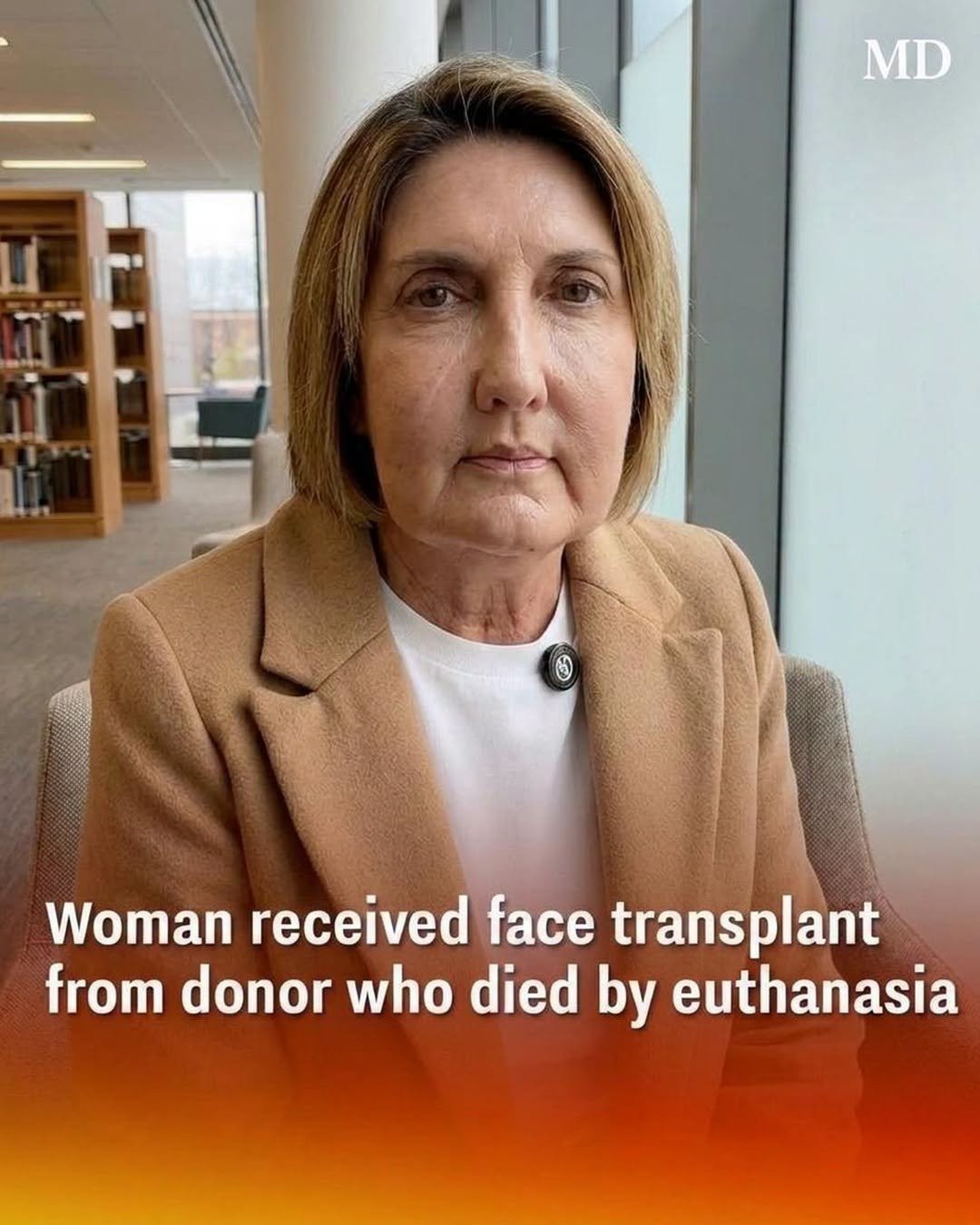
In 2024, a spider bite led to a severe bacterial infection that left a 59-year-old woman, Carmen, with devastating facial damage and a long stay in a medically induced coma. When she woke, she no longer recognised her own reflection, and everyday things most people take for granted had become enormously difficult.
Instead of settling for ordinary tissue grafts, she hoped for a full facial transplant that could restore more natural movement. Her team at Vall d’Hebron Hospital in Barcelona assessed her, and then an extraordinary match appeared: a young woman who had chosen assisted dying had wished to donate her face, and the two proved compatible in blood group, sex and facial anatomy.
The operation, described as a world first of its kind, involved around 100 professionals, with four surgeons working in turns across roughly 16 hours. The team first restored blood flow through the donated tissue before removing the damaged tissue and completing the transplant. The surgeons called the donor’s decision exceptional, and said her final wish would give another person a different future.
Recovery has meant relearning facial movements, from blowing kisses to drinking more comfortably, while doctors continue to monitor the risks of rejection and ongoing treatment. Today Carmen is slowly rebuilding routines she once thought lost, hoping one day to enjoy simple pleasures again — including a traditional ham sandwich. For her, the transplant was never only about appearance; it was about independence, confidence and getting her life back.