
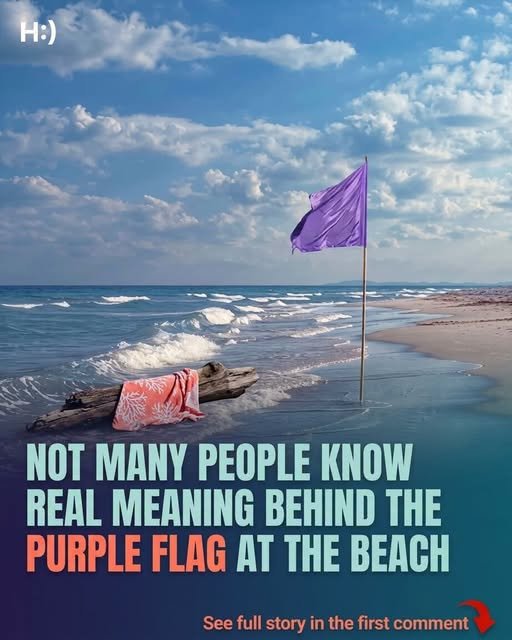
Most beachgoers know red means danger and green means calm, but far fewer know what a purple flag means — and it is not about the waves at all. A purple flag is a warning that potentially dangerous sea creatures have been sighted in the area, such as jellyfish, stingrays, or other animals that can sting when touched or disturbed. Its purpose is to inform rather than alarm: it tells you something is lurking beneath the surface that you cannot see from the sand.
Importantly, a purple flag does not usually mean the water is closed. Swimming is often still permitted, but the flag calls for extra caution and awareness. The first thing to do is ask the lifeguards on duty about current conditions and where the marine life is most active — they know the local waters better than anyone and can tell you which stretches to avoid.
There are simple habits that make a real difference. When wading into shallow water, shuffle your feet instead of stepping firmly, so stingrays are warned and swim away before you reach them. Wear protective swimwear such as a rash guard to reduce skin exposure if jellyfish are around, keep a close eye on children, who may not recognise ocean hazards, and keep basic first-aid supplies nearby so you can respond calmly to a minor sting.
What you should not do is panic, assume the water is shut, or ignore the warning and carry on as normal. Green, yellow and red flags signal wave and current conditions, but purple warns of something different — life beneath the surface. Respecting that message is the difference between a carefree beach day and an unpleasant surprise.