Tiny Thread-Like Bumps on the Neck: What They Could Mean
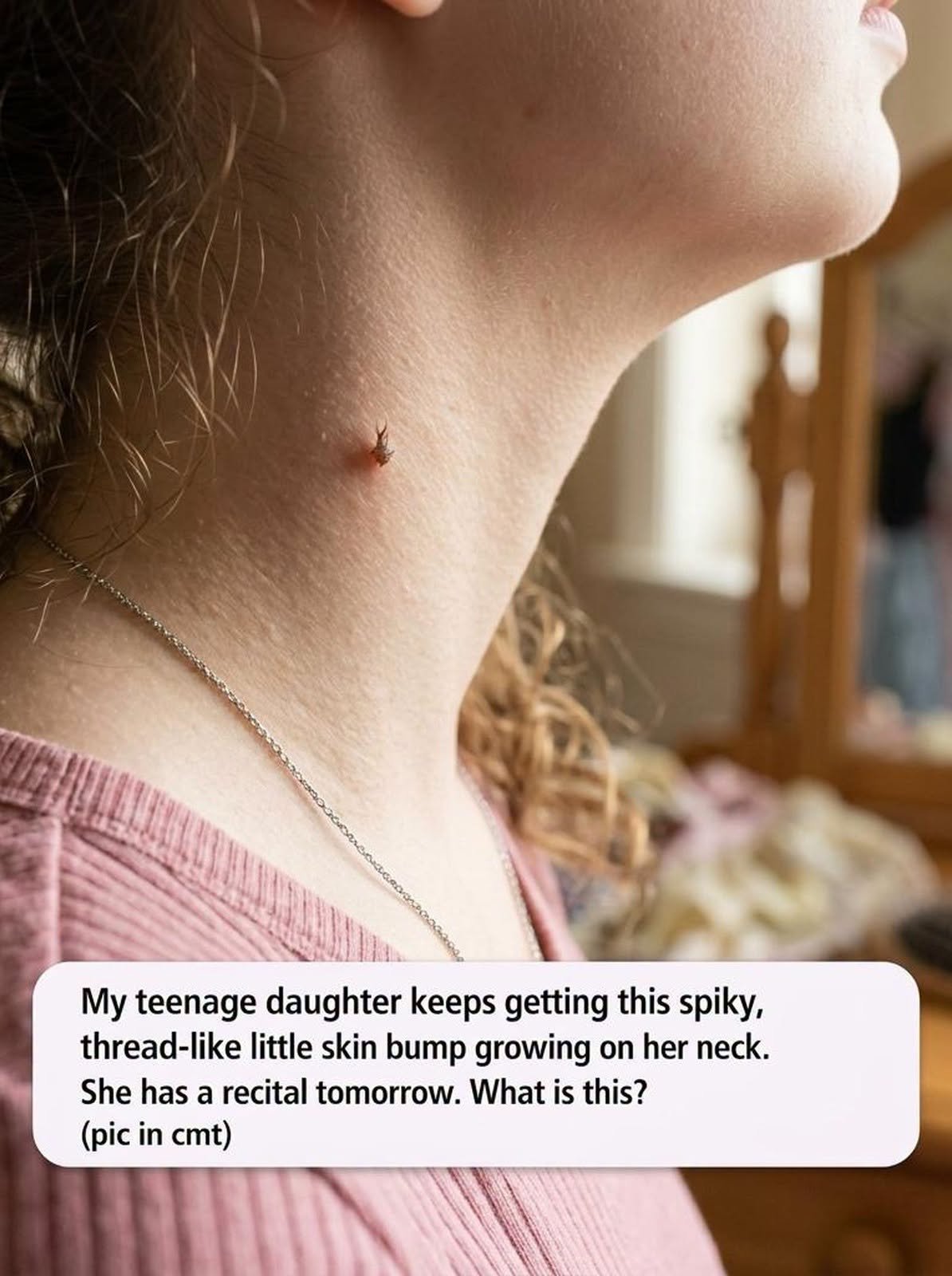
A small, unusual bump on the neck can quickly become a source of concern, particularly when it appears just days before an important family gathering or school performance. Unlike an ordinary pimple, the growth may look like a tiny thread or a narrow projection extending from the skin. Parents sometimes notice these changes while helping their teenagers prepare for an event, raising questions about whether the bump is harmless or requires medical attention.
It may feel soft, appear slightly raised, or catch against clothing and jewelry. Although many small skin growths have common, non-serious explanations, their appearance alone cannot reveal exactly what they are.
One possible explanation is a skin tag, a small, soft growth that often develops in areas where skin rubs against skin or clothing. Skin tags commonly appear around the neck, under the arms, and in other skin folds. They may have a narrow base that makes them look like tiny threads hanging from the surface.
Skin tags are generally harmless and are not contagious. They can occur in teenagers as well as adults, although they become more common with age. Friction may contribute to their development, but not every small projection on the neck is a skin tag.
Another possibility is a common wart. Warts are caused by certain types of human papillomavirus (HPV) and may have a rough, firm surface. Some develop an elongated or finger-like shape, which can make them look different from the rounded warts people commonly recognize. Warts can spread through direct contact or by transferring the virus between areas of skin.
Other conditions can also produce small neck bumps. A harmless mole may occasionally protrude from the skin, while an irritated hair follicle or another benign skin growth can create a raised spot. Less commonly, a growth may require further investigation, which is why it is important not to diagnose it based on appearance alone.
When should you be concerned?
Most small skin growths are not emergencies, but certain changes deserve medical attention. Arrange an appointment with a healthcare professional if a bump:
- Grows quickly or changes noticeably in color or shape.
- Bleeds without an obvious injury or develops an open sore.
- Becomes persistently painful, itchy, swollen, or inflamed.
- Looks unusual compared with other moles or skin growths.
- Keeps returning after it appears to heal.
Seek prompt medical assessment if the lump feels deep beneath the skin, is accompanied by fever, or is associated with difficulty swallowing or breathing. Difficulty breathing or significant difficulty swallowing requires emergency care.
What should you avoid doing?
If the growth catches on a necklace or collar, it may be tempting to remove it at home. However, cutting, pulling, tying thread around it, or applying harsh chemicals can cause bleeding, infection, scarring, and damage to surrounding skin.
Over-the-counter wart treatments should not be used on an unidentified growth, particularly on the delicate skin of the neck. A healthcare professional can examine the area and determine whether treatment is necessary.
If removal is appropriate, a clinician may recommend a suitable procedure based on the type, size, and location of the growth.
Can these bumps be prevented?
Not all skin growths can be prevented. However, avoiding unnecessary friction, wearing comfortable clothing, and keeping the skin clean may help reduce irritation. Avoid scratching or picking at existing bumps, especially if a wart is suspected.
It is also worth remembering that a new skin growth does not automatically indicate poor hygiene or a serious health problem. Many benign growths develop for reasons unrelated to cleanliness.
The most important thing to remember
A tiny, thread-like bump on the neck may turn out to be a harmless skin tag or another common skin condition. Still, the shape alone is not enough to establish a diagnosis, and a new or changing growth should be assessed when there is uncertainty.
If you notice one on yourself or your child, take note of when it appeared, whether it has changed, and whether it causes discomfort. A healthcare professional can usually assess the growth and explain the appropriate next steps.
The bottom line: Don’t panic over a small neck bump, but don’t attempt to remove an unidentified growth yourself. A careful examination is the safest way to understand what it is and whether anything needs to be done.