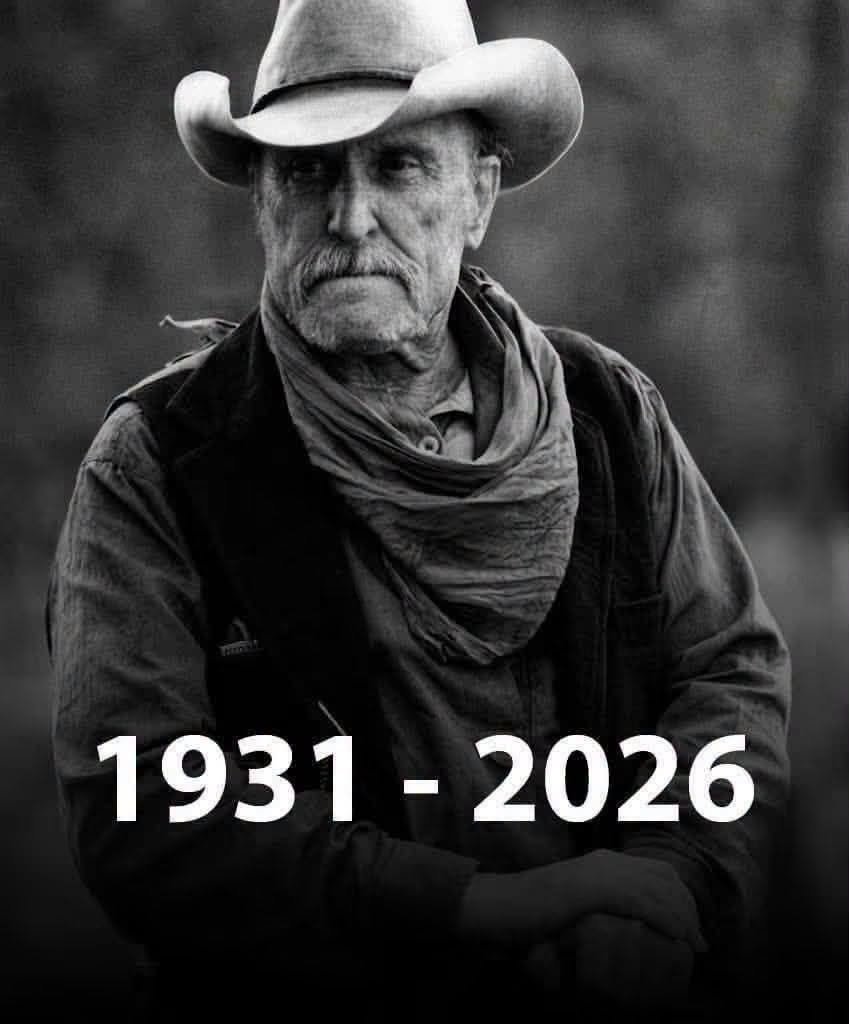
Robert Duvall’s passing feels like losing the last steady heartbeat in a room full of noise. While others chased headlines, he chased honesty, letting his characters unfold in pauses, glances, and unfinished thoughts. Tom Hagen’s quiet loyalty, Kilgore’s unnerving bravado, Mac Sledge’s worn-out grace—each man arrived whole, as if Duvall had lived an unseen lifetime before the camera ever rolled.
He aged without retreating, letting time carve itself into his face and then offering that history to every role. In an era obsessed with transformation, he proved that the most radical act is to remain truthful. No scandals, no reinventions, just decades of work that asked audiences to lean in and really look.
His career stretched across nearly seven decades and more than a hundred screen appearances. He could disappear into a supporting role and somehow make it impossible to forget him. From Boo Radley in To Kill a Mockingbird to Tom Hagen in The Godfather, from Colonel Kilgore in Apocalypse Now to Mac Sledge in Tender Mercies, Duvall understood that a character did not need to dominate a scene to own it.
That gift reached its fullest expression in Tender Mercies, where his portrayal of a broken country singer searching for redemption earned him the Academy Award for Best Actor. It was the kind of performance that seemed almost too quiet for Hollywood—and that was precisely why it endured. Duvall never needed to announce a character’s pain. He allowed audiences to discover it.
He also refused to separate acting from life. He studied accents, landscapes, mannerisms and people, absorbing the small details that made his characters believable. He wrote, directed and produced as well, but perhaps his greatest achievement was simpler: he made people feel that the men he played existed before the story began and would continue existing after the credits rolled.
On February 15, 2026, Duvall died peacefully at his home in Virginia at the age of 95, according to his wife, Luciana Pedraza Duvall.
And maybe that is the hardest part of saying goodbye to someone like Robert Duvall. There was never just one Robert Duvall to remember. There were dozens of men—complicated, wounded, proud, funny, frightening, lonely and deeply human—left behind in the films.
The man is gone, but the faces remain. The silences remain. The voices remain.
And somewhere, long after the screen goes dark, Robert Duvall is still standing in the frame, reminding us that great acting was never about pretending to be someone else.
It was about telling the truth.