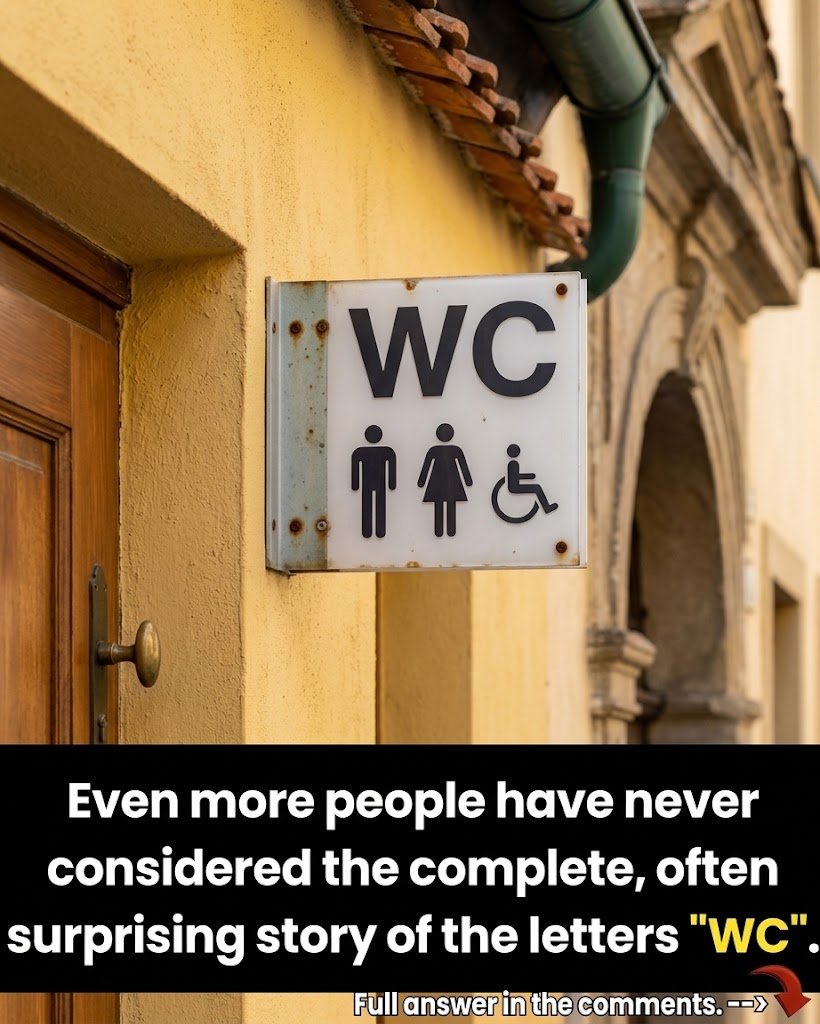
Whether you’re at an airport, a train station, a café, or even a small roadside restaurant, one sign is guaranteed to appear: the restroom symbol. Sometimes it’s the letters “WC,” other times it’s the familiar stick figures—one in trousers, one in a dress. To most of us, these are simply practical directions. But behind them lies a fascinating history that spans centuries, cultures, and evolving design.
The Origins of WC
The abbreviation WC comes from “Water Closet,” a term first used in 19th-century England. At that time, indoor plumbing was considered a luxury reserved for wealthier homes. Before flush toilets became common, people relied on outdoor latrines or chamber pots.
When the water-flushing toilet began to spread during the Victorian era, families needed a dignified term to describe this new household feature. Instead of “toilet” (which originally referred to personal grooming), the phrase “Water Closet” emerged. The name emphasized the technological advancement while maintaining a sense of modesty.
Although few people today use the full phrase, the initials WC have endured. Across Europe and much of Asia, WC is still one of the most recognizable terms for a restroom, appearing on signs in airports, hotels, and restaurants.
Restroom Terminology Around the World
Language, like culture, varies from place to place—and so do the words people use for restrooms.
United States: “Restroom,” a polite term emphasizing comfort.
Canada: “Washroom,” a slightly more formal variation.
United Kingdom: “Toilet” and “Loo” are most common, though WC still appears on signage.
France: “Toilettes,” widely understood by travelers.
Philippines: “CR,” short for Comfort Room.
Australia & New Zealand: “Toilet” is the everyday word, though WC is seen in older or international settings.
For global travelers, these differences can be confusing—which is why symbols became essential.
The Rise of Restroom Icons
By the mid-20th century, international travel was booming. Words alone no longer sufficed, since not every visitor could read the local language. Designers introduced pictograms—simple, universally recognizable images.