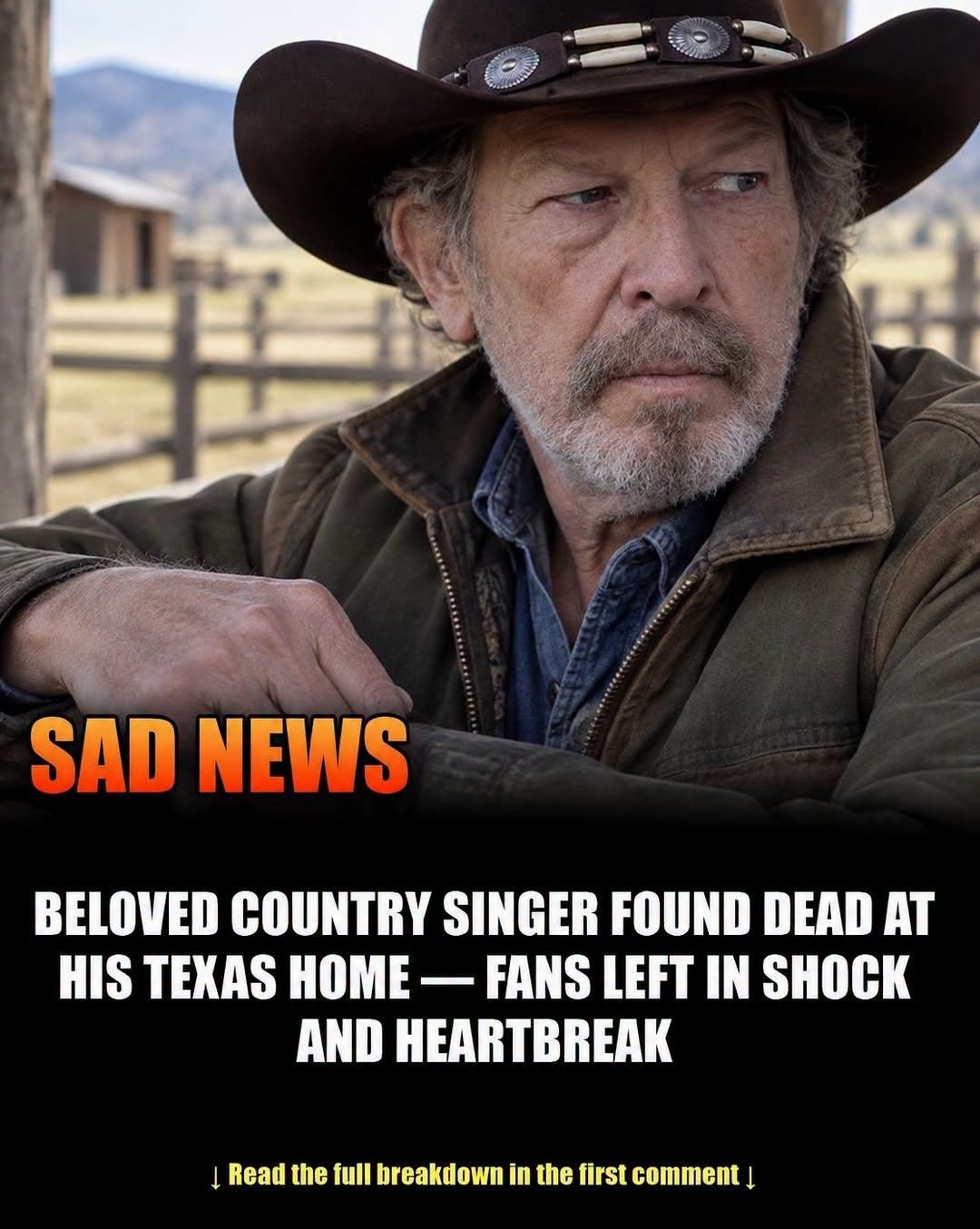
Kinky Friedman: The Texas Original Who Turned Irreverence Into an Art Form
The world never quite knew what to do with Kinky Friedman. He didn’t fit, didn’t bend, and certainly didn’t behave. He turned Texas itself into his stage, his punchline, and his confession booth. Every song, every novel, and every campaign felt like a dare: laugh, then look in the mirror.
He moved through American culture like a wandering question mark, refusing to settle for one version of himself. One decade he was fronting a band that mocked country music from inside the genre; another, he was writing mystery novels that treated crime scenes like confessionals. Then he ran for governor of Texas with a platform that sounded like satire until you realized how much truth was buried inside the jokes.
Born Richard Samuels in Chicago in 1944 and raised largely in Texas, Friedman eventually adopted the nickname “Kinky,” a reference to his famously curly hair. But the name became much more than a nickname. It became a character, a brand, and eventually a philosophy. He understood that sometimes the easiest way to tell the truth was to make people laugh first.
In the 1970s, he emerged as the leader of Kinky Friedman and His Texas Jewboys, a deliberately provocative country band whose music poked at racial stereotypes, religion, politics, and the conventions of Nashville. Friedman wasn’t interested in being polite. His songs could be outrageous, absurd, offensive to some, and hilarious to others. Beneath the provocation was a willingness to expose hypocrisy wherever he found it.
He also became one of the few entertainers who could make irreverence feel like a literary tradition. His mystery novels introduced readers to a fictionalized version of himself—a cigar-smoking, wisecracking detective navigating murders, celebrities, musicians, and the strange mythology of Texas. The books allowed Friedman to turn his own public persona into another layer of the joke.
But beneath the humor was a deep affection for the people and places he wrote about.
Friedman eventually settled near Medina, Texas, where he became closely associated with the Hill Country and with animal rescue. His love for animals wasn’t simply another piece of his eccentric public image. He established Utopia Animal Rescue Ranch, creating a place where abandoned and abused animals could be cared for. The ranch reflected another side of Friedman: the comedian who could spend years making jokes about himself while taking the responsibility of caring for vulnerable creatures seriously.
Then came politics.
In 2006, Friedman launched an independent campaign for governor of Texas. His campaign was unlike anything traditional Texas politics had seen. He used humor relentlessly, questioned established political conventions, and promoted ideas that included legalizing marijuana, protecting reproductive rights, reforming education, and improving the state’s approach to immigration and criminal justice.
The campaign attracted national attention precisely because nobody was quite sure where the joke ended and the serious political argument began.
Friedman understood the power of that uncertainty. His political persona was theatrical, but many of the issues he raised were genuine. He used satire not simply to entertain but to force uncomfortable questions into public conversation.
He ultimately did not come close to winning the governorship, but the campaign became part of his mythology. It demonstrated that Friedman had no interest in remaining inside the boundaries other people had drawn for him. Musician, novelist, humorist, animal advocate, political candidate—he could occupy all of those identities without asking permission.
His career was built around contradiction.
He could be crude and compassionate. Cynical and idealistic. A provocateur who cared deeply about loyalty. A performer who understood silence. A political outsider who nevertheless loved the traditions of the state he constantly mocked.
That contradiction was perhaps the key to understanding him.
Friedman’s humor often worked because there was something recognizable underneath the absurdity. He could exaggerate Texas stereotypes until they became ridiculous, but the joke frequently circled back to something real: loneliness, prejudice, vanity, hypocrisy, aging, friendship, or the strange human desire to belong while insisting on being different.
He never seemed particularly interested in becoming respectable.
Instead, he built an entire career around the idea that respectability could be overrated.
For generations of Texans and fans beyond the state, Friedman represented a particular kind of freedom—the freedom to be complicated. He didn’t need to choose between entertainer and activist, writer and musician, comedian and citizen. He could be all of them at once.
His influence was never primarily about chart positions or political victories. It was about permission.
He gave people permission to laugh at institutions, to question authority, to make fun of themselves, and to remain stubbornly individual in a culture increasingly obsessed with categories.
And Texas remained at the center of it all.
Friedman understood that Texas was already larger than life. Its myths, characters, contradictions, landscapes, and political arguments provided almost endless material. He could tease the state because he belonged to it culturally, and he could criticize it because he cared enough to demand something better.
That made his relationship with Texas unusually intimate. He wasn’t simply an outsider making fun of the place. He was one of its eccentric children, forever arguing with the family while refusing to leave the house.
Kinky Friedman died on June 27, 2024, at his home in the Texas Hill Country at the age of 79. His death marked the end of a career that had never followed a conventional path.
But conventional was never the point.
Friedman left behind music, novels, political memories, animal rescue work, friendships, controversies, and countless stories. More importantly, he left behind a way of moving through the world: question the obvious, distrust the performance of seriousness, care about the vulnerable, and never be afraid to make the room uncomfortable.
The jokes will remain part of his legacy.
So will the songs.
So will the novels.
But perhaps what lasts longest is the strange lesson beneath all of them: you don’t have to become a simpler version of yourself just because the world finds complexity inconvenient.
Kinky Friedman spent his life refusing to become easy to categorize.
And in the end, that may have been the most Texas thing about him of all.