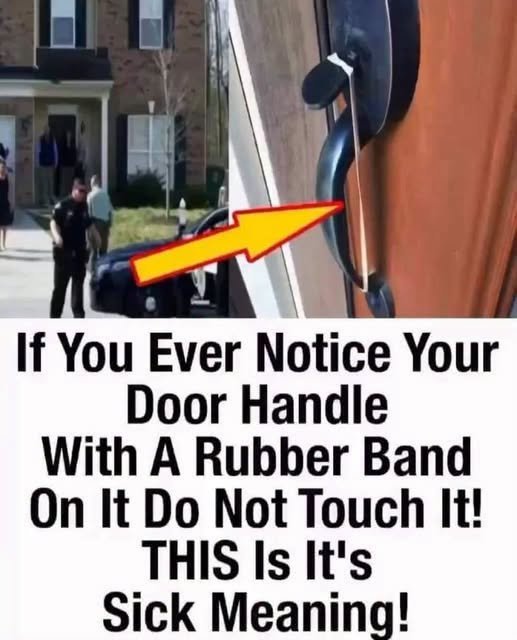
A strange object on your front door can make home feel suddenly unsafe. Online warnings claim a rubber band could mean criminals are watching your routine, turning an ordinary discovery into a frightening possibility. But before fear takes over, there is a crucial gap between a viral warning and a proven threat—and knowing the difference starts with real answers.
Finding a rubber band around your door handle can be unsettling, but its presence alone does not establish that someone is targeting your home. Claims that burglars routinely use bands to mark properties or monitor residents should not be treated as verified without credible local evidence. There may be an innocent explanation. What matters most is whether you notice actual damage, interference with the latch, repeated unexplained incidents, or other concrete signs of tampering.
If it feels safe, photograph the item, remove it, and check that the door closes and locks properly. Inspect other accessible entrances and ask neighbors whether they noticed anything unusual, without presenting speculation as fact. Exterior lighting and appropriate security devices can offer added reassurance. Report suspected tampering to local police through their nonemergency line; if someone appears to be breaking in or you face immediate danger, move somewhere safe and call emergency services. Stay observant—not frightened by rumor.
Why the Rubber-Band Warning Spread
The idea has gained attention because it sounds simple and plausible: someone supposedly places a rubber band on a door so that it interferes with the lock or reveals whether the door has been opened. Videos and posts can make the claim appear widespread, particularly when they are accompanied by dramatic warnings about burglars “marking” homes.
However, a widely shared story is not the same thing as established evidence. A rubber band found on a door could have been left accidentally, attached by a child, caught on the handle, or placed there for an entirely unrelated reason. Without additional evidence, it is impossible to determine someone’s intentions simply from the presence of the object.
Look for Evidence, Not Patterns
The safest approach is to separate what you observed from what you suspect. If you found a rubber band, that is a fact. Assuming it was placed by a burglar is an interpretation.
Pay greater attention to concrete warning signs, such as a damaged lock, a door that no longer closes normally, unexplained scratches around an entry point, missing property, or evidence that someone has attempted to enter. Multiple unusual incidents occurring together may also justify contacting authorities.
If you live in an apartment or shared building, tell the building manager or security staff if you believe an entrance has been tampered with. They may already be aware of similar incidents or have access to security footage.
Simple Steps Can Improve Peace of Mind
You do not need to live in fear because of a single unexplained object. Make sure doors and windows are properly secured, replace damaged locks, keep outdoor areas reasonably well lit, and consider security cameras or other appropriate devices if they suit your circumstances.
It can also help to establish a routine for checking doors and windows before leaving home or going to bed. If you see something suspicious, document it rather than confronting anyone yourself.
The most important lesson is straightforward: take unusual signs seriously enough to check them, but not so seriously that an unverified internet warning becomes a certainty. A rubber band by itself cannot tell you who put it there or why. Good security decisions should be based on observable evidence, reliable local information, and sensible precautions—not viral speculation.