
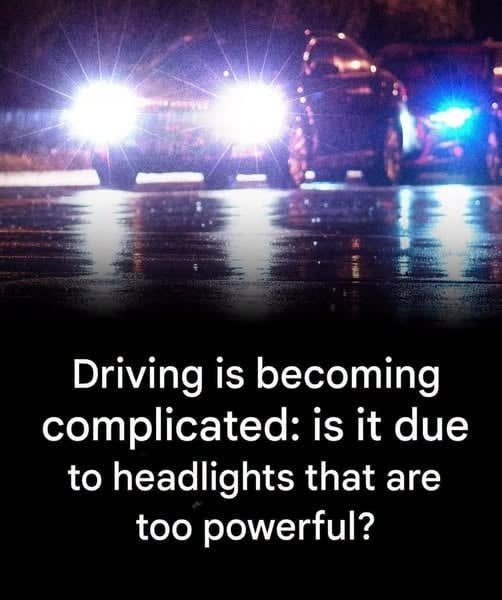
The flash feels like an attack. Your vision floods with white, the lane lines dissolve, and for a terrifying heartbeat you’re driving half-blind, praying your hands remember what your eyes can’t see. Is something wrong with you… or has the road itself become hostile? Millions feel this same creeping fear, night after night. Modern cars promise “safer” lighting, yet something about today’s beams feels harsher, colder, unforgiving. Beneath the glow lies a quiet design shift, a clash between technology, tired eyes, and tiny details most drivers never think abou…
What feels like your vision failing is often a perfect storm of engineering and environment. Modern LED headlights are far more intense than old halogens, with a cooler, blue-toned light that scatters aggressively in rain, fog, and on wet asphalt. That scatter washes out contrast, so instead of clarity you get a wall of glare. Add taller SUVs and trucks to the mix, and their higher-mounted headlights can strike directly at eye level, especially when misaligned or weighed down in the rear.
Yet this isn’t a problem you’re helpless against. Having your headlights professionally aimed, adjusting beams when carrying heavy loads, and keeping both sides of your windshield spotless sharply reduce glare. On the road, shifting your gaze slightly toward the right edge instead of staring into oncoming lights eases strain without sacrificing control. With adaptive, self-leveling headlights becoming more common, the future of night driving doesn’t have to be blinding—it can be calmer, clearer, and quietly safer.