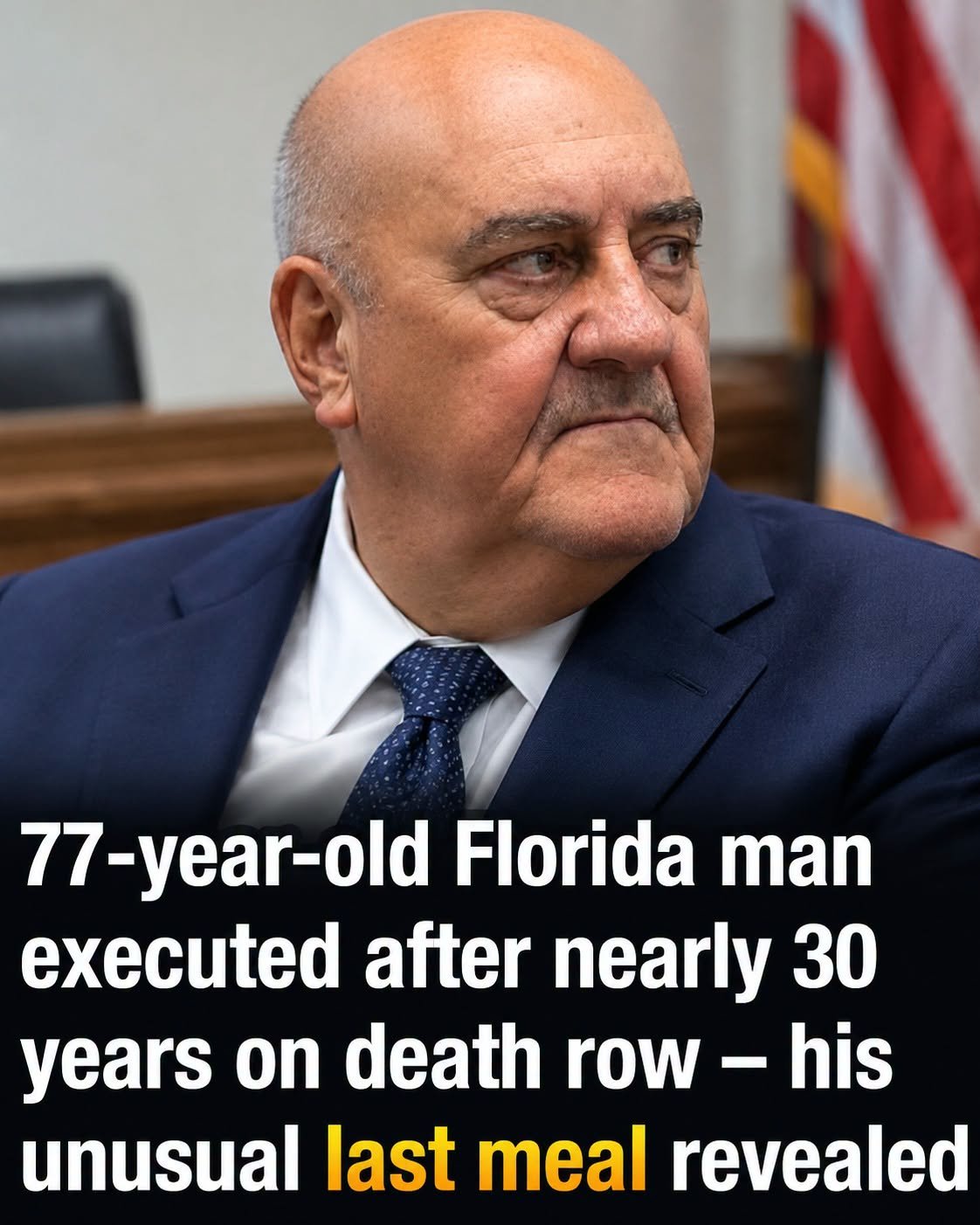
Minutes before his execution, Curtis Wilkie Beasley offered an apology. Decades after Carolyn Monfort was found dead inside her Florida home, the 77-year-old inmate faced his final moments with a spiritual adviser seated nearby, bringing a decades-long legal case to its end.
Beasley was convicted of first-degree murder, robbery, and grand theft following Monfort’s 1995 killing. Prosecutors said he had been staying temporarily at her home and was doing maintenance work at an apartment complex she managed. After the killing, he took Monfort’s car and money, fled Florida, and eventually settled in Alabama under another identity before authorities located and arrested him.
For years, Beasley continued challenging his conviction and death sentence. His final appeals included arguments that executing him at 77, amid reported cognitive decline, would violate the Constitution. The Florida Supreme Court rejected those arguments on September 22, and the U.S. Supreme Court declined to intervene on the day of his execution.
At Florida State Prison near Starke on September 29, the execution chamber opened shortly after 6 p.m. Beasley was already secured to a gurney with an IV in place, while a spiritual adviser remained at his feet. When asked if he wanted to make a final statement, he said, “I want to apologize for all the mistakes I made.”
A three-drug lethal-injection protocol was then administered. Beasley breathed heavily as the drugs took effect, and prison officials later confirmed that he was unresponsive. A medic entered the chamber shortly after 6:11 p.m., and Beasley was pronounced dead at 6:12 p.m.
His death marked Florida’s 16th execution of 2026 and continued a year in which the state has carried out more executions than any other state. For the families involved, however, the case was never simply a number in a record. It represented more than three decades of grief, court proceedings, appeals, and waiting.
Beasley’s final apology closed his side of the story, but it could not erase what happened to Carolyn Monfort or the long consequences that followed her death. After nearly 31 years, his case had reached its final chapter.