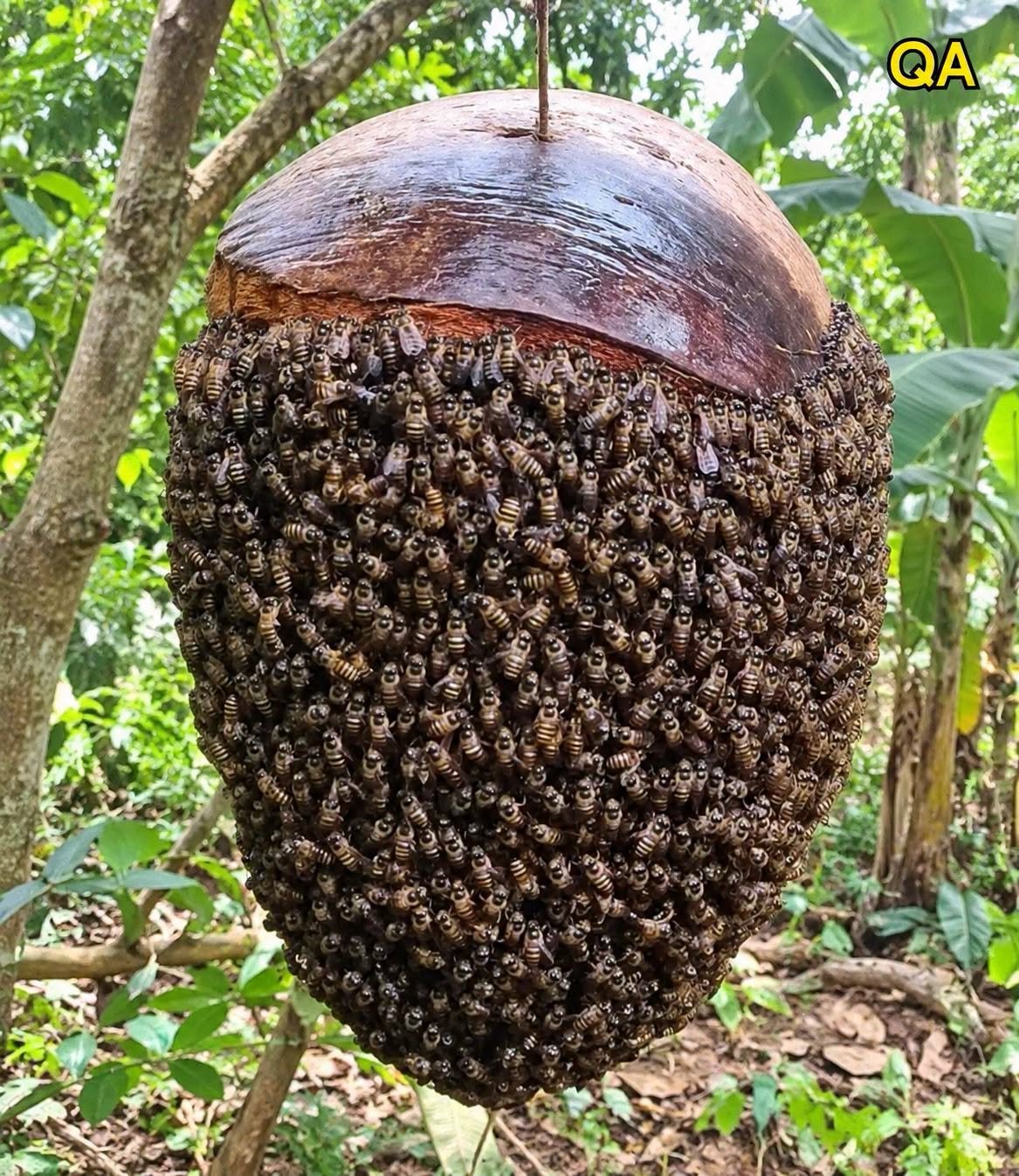
And perhaps the most remarkable part is that no bee is truly in charge. There is no single leader directing every flight, every feeding decision, or every response to danger. Instead, the colony operates through thousands of small interactions—touches, scents, movements, vibrations, and chemical signals. Information passes from one bee to another until the hive collectively responds.
Even the famous waggle dance is part of this extraordinary communication system. A returning worker can signal where a valuable food source is located, helping other foragers navigate toward it. If conditions change, the colony changes with them. A food source disappears, temperatures fall, predators threaten the nest, or the colony grows crowded—and the bees adjust their behavior accordingly.
Yet every bee’s story is temporary. A worker may spend her life cleaning cells, feeding larvae, producing wax, guarding the entrance, and eventually flying miles in search of flowers. Her body will age, her wings will wear, and one day she will disappear. But the colony continues, carrying forward the work of countless generations.
That is what makes a hive so extraordinary. It is not simply a collection of insects. It is a living network in which individual lives become part of something much larger. Every flight, every drop of nectar, every guarded entrance, and every carefully maintained cell contributes to a system that has survived for millions of years.
The next time a bee lands on a flower, pause for a moment before it disappears. That tiny creature may look insignificant—but for a few seconds, you are watching one small part of an immense, ancient world in motion.