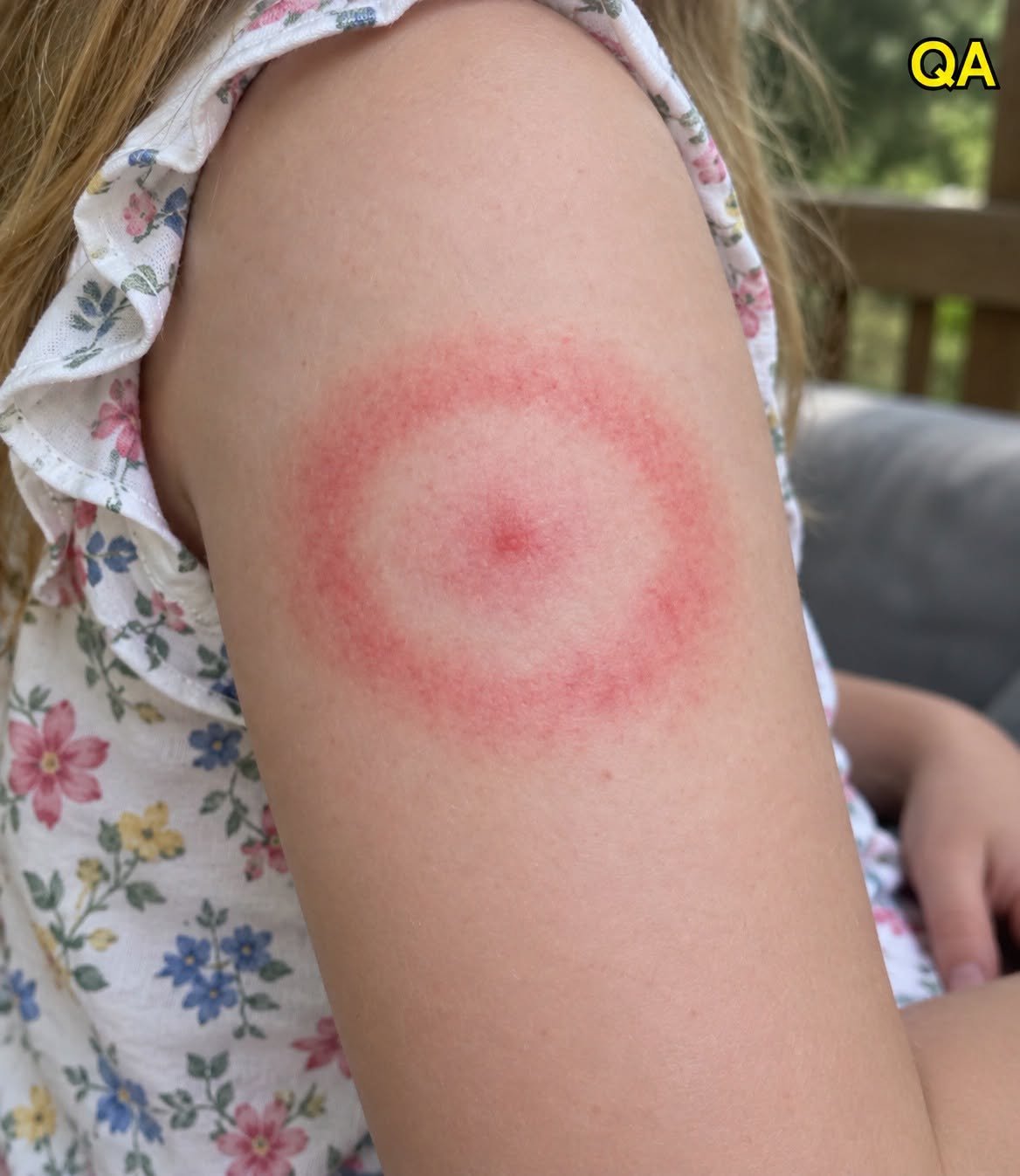
What That Ring-Shaped Rash Really Means
You see it in an instant—and your stomach drops. A red ring on your child’s skin can look remarkably similar to frightening images shared online. Headlines about Lyme disease, serious infections, and missed diagnoses can make even a harmless-looking rash feel like an emergency. But the appearance of a rash alone rarely provides enough information to determine what caused it.
Ring-shaped marks can have many explanations. Ringworm, despite its name, is a fungal infection rather than a worm. It often produces an itchy, circular or expanding patch with a more noticeable edge. Insect bites, allergic reactions, eczema, and other inflammatory skin conditions can also create circular or ring-like patterns. A rash associated with a tick bite can sometimes resemble a target, but not every red ring is Lyme disease—and Lyme disease itself cannot be diagnosed from a photograph alone.
That is why doctors look beyond the shape. They may ask whether your child has recently been outdoors, whether a tick was noticed, how quickly the mark appeared, whether it is itchy or painful, and whether other symptoms developed. Fever, unusual tiredness, significant pain, swelling, breathing difficulties, or a rapidly spreading rash deserve prompt medical attention.
Parents can also make the situation easier by taking a clear photograph when the rash first appears and another later if it changes. Note its approximate size, when you first noticed it, and any new symptoms. Avoid repeatedly applying different creams or medications without knowing what you are treating, since this can sometimes alter the appearance of the skin.
Most importantly, don’t let a frightening search result replace a medical evaluation. A ring-shaped rash may be something simple and readily treatable, but a clinician can decide whether testing or treatment is appropriate based on the complete picture.
The next time you notice a mysterious mark on your child’s skin, pause before panicking. Observe carefully, document what you see, watch for changes, and seek professional advice when necessary. The internet can show you possibilities—but your child’s symptoms, history, examination, and a qualified medical professional provide the context needed to understand what is actually happening.