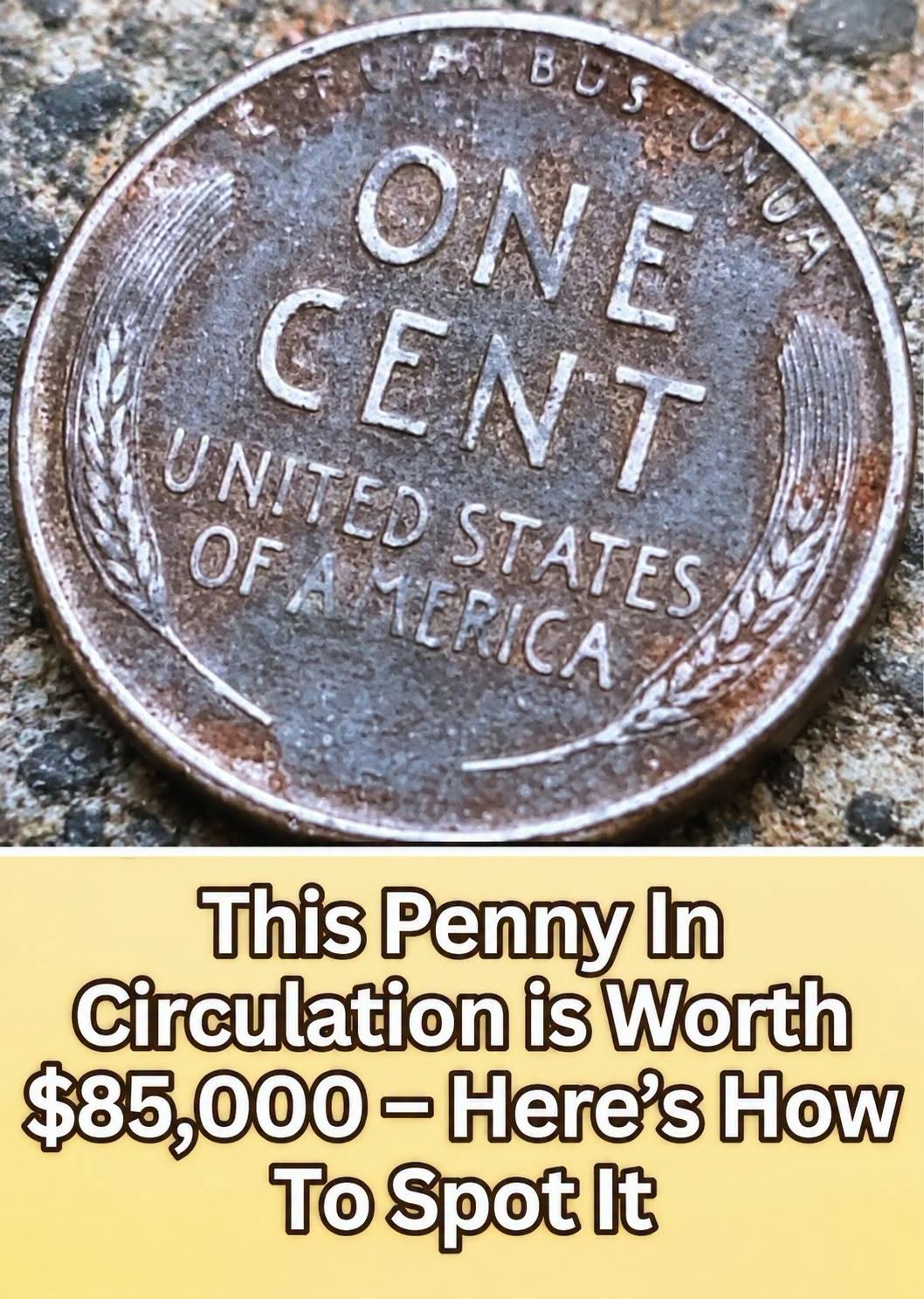
The story becomes even more fascinating when you realize how ordinary these coins can look. A genuine 1943 copper cent does not announce its rarity. It carries the familiar Lincoln portrait on the front and wheat ears on the reverse, just like other cents from that era. The key difference is the metal. While the standard 1943 cents were made from zinc-coated steel and have a distinctive silver-gray appearance, the rare copper examples have the familiar reddish-brown color associated with bronze cents.
That difference is also why collectors are extremely cautious. Many coins advertised as “1943 copper pennies” are not genuine errors. Some are ordinary 1943 steel cents that have been artificially altered, plated, or coated to resemble copper. Others may be misidentified coins from a different year. Because of the enormous value associated with authentic examples, professional authentication is essential before assuming a coin is rare.
One of the most famous examples is the 1943-D bronze cent, struck at the Denver Mint. Only a very small number of genuine 1943 bronze cents are known from the three U.S. Mints that produced cents that year. Their extraordinary rarity has made them some of the most desirable Lincoln cents ever discovered.
There is also an interesting test collectors sometimes discuss: a genuine steel 1943 cent is attracted to a magnet, while a copper or bronze cent is not. But a magnet test alone cannot prove authenticity. Weight, dimensions, surface characteristics, composition, and die characteristics all need to be examined carefully. Modern counterfeits can fool casual tests.
And that’s what makes the story of the 1943 copper cent so compelling. It wasn’t created as a special coin. It wasn’t deliberately hidden away by the Mint. It was essentially a wartime production accident—a few ordinary pieces of copper that escaped a massive change in manufacturing and ended up carrying one of the most valuable mistakes in American coinage.
So if an old jar of coins, inherited collection, or forgotten box contains a 1943 Lincoln cent, don’t assume it’s valuable simply because of the date. Most 1943 cents are common steel cents. But if one appears copper-colored, don’t clean it, polish it, scrape it, or try to alter it. Preserve it exactly as found and have it examined by a reputable coin dealer or professional grading service.
Because once in a while, history really can hide in the smallest places—and that dull little penny sitting unnoticed for decades may be far more interesting than it first appears.