The Last Living Echoes of Hollywood’s Golden Age
Some of the world’s oldest stars are still here, still shining, and almost no one is talking about it. They’ve outlived studios, scandals, and entire eras of entertainment.
Their stories are raw, defiant proof that time can’t silence true talent. But behind the applause, there’s a haunting question about what happens when the spotlight moves on.
They are the last living echoes of the 20th century’s brightest stages, and yet their presence feels urgently modern.
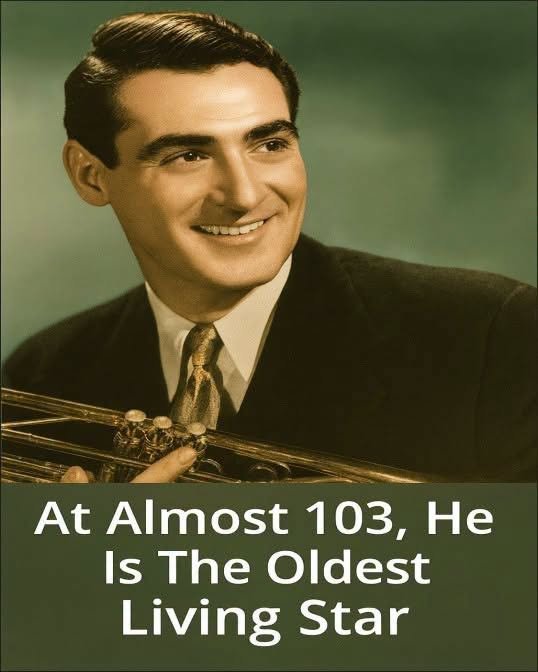
Elizabeth Waldo’s life work preserving Indigenous music now reads like a blueprint for cultural survival. Karen Marsh Doll’s memories of The Wizard of Oz and Gone with the Wind are no longer just anecdotes; they’re living bridges to a Hollywood that exists only in dusty reels and fading posters. Ray Anthony, at 103, carries the pulse of the big-band era in every note, proof that an entire musical world can survive inside one determined soul.
Around them, June Lockhart, Eva Marie Saint, Dick Van Dyke, Mel Brooks, William Shatner, Barbara Eden, Clint Eastwood, Sophia Loren, Michael Caine, Julie Andrews, Shirley MacLaine, Al Pacino, and Jane Fonda turn age into a quiet rebellion.
Their activism, performances, humor, and public grace remind us that legacy isn’t what you leave behind—it’s what you refuse to stop giving while you’re still here.
They Remember a Different Hollywood
For these performers, Hollywood was not always the polished machine we know today.
There were long studio contracts, exhausting filming schedules, live television broadcasts, crowded sound stages, handwritten scripts, and careers built before social media could make someone famous overnight.
Many of them became household names when entertainment was shared collectively. Families gathered around the same television. Audiences waited months for a new film. Radio stars could become national sensations without ever appearing on a computer screen.
That world has largely disappeared.
But the people who lived through it have not.
Their memories contain details that cannot be recreated by documentaries or restored footage. They remember what it felt like to walk onto a soundstage when the lights were hotter, cameras were heavier, and mistakes could cost precious film.
They remember colleagues who became legends, friendships that never made headlines, and moments that history books often overlook.
Age Has Changed the Meaning of Stardom
There is something particularly powerful about seeing an entertainer continue creating, speaking, performing, or simply showing up decades after their first appearance.
In an industry obsessed with youth, longevity becomes its own form of rebellion.
Dick Van Dyke has continued performing with the same mischievous energy that made generations laugh. Mel Brooks has remained unapologetically funny. William Shatner has repeatedly reinvented himself rather than allowing one famous role to define his entire existence.
Others have used their later years to advocate for causes, support younger artists, preserve history, or speak openly about aging.
They demonstrate something modern celebrity culture often forgets:
A career does not have to end simply because youth does.
The Women Who Refused to Disappear
For women in particular, surviving and remaining visible in entertainment has often required an extra layer of determination.
Hollywood has historically been unforgiving toward actresses as they aged. Roles became fewer, expectations changed, and the industry frequently treated youth as though it were a prerequisite for relevance.
Yet performers such as Jane Fonda, Sophia Loren, Julie Andrews, Shirley MacLaine, Barbara Eden, Eva Marie Saint, and June Lockhart have continued to represent something larger than individual careers.
They are reminders that femininity does not have an expiration date.
Their lives encompass acting, motherhood, activism, business, writing, public service, and decades of cultural change. They have lived through wars, technological revolutions, changing social attitudes, and transformations in the entertainment industry that would have been unimaginable when they began.
And still, they remain recognizable.
Still curious.
Still remembered.
Still capable of surprising audiences.
The Living Archive
Perhaps the greatest gift these stars provide is not another performance.
It is memory.
Every surviving member of that generation is, in a sense, a living archive.
They can describe what famous studios were like before modern production technology. They can remember performers before they became legends. They can explain how audiences reacted before everything could be measured through ratings, algorithms, and instant online reactions.
When they speak, they connect the present to a world that increasingly exists only in photographs.
That makes their stories valuable far beyond entertainment.
History is not preserved only in museums.
Sometimes, history is sitting in a chair, telling a story about what happened seventy years ago.
What Happens When the Applause Fades?
There is also a bittersweet side to extraordinary longevity.
The longer someone lives, the more people they lose.
Friends disappear. Co-stars pass away. Familiar studios close. Favorite restaurants vanish. Neighborhoods change. Entire generations of colleagues become memories.
Eventually, a person can find themselves among very few who remember the world exactly as it was.
That can be both a privilege and a burden.
Imagine being one of the last people alive who can say, “I was there.”
There is something almost haunting about it.
The photographs remain. The movies remain. The recordings remain.
But the people who can explain what those moments truly felt like become fewer every year.
Their Greatest Performance May Be Simply Continuing
Perhaps that is why these remarkable survivors deserve more attention.
Not because they are old.
Not because their names once appeared above movie titles.
And not simply because they survived longer than expected.
They deserve attention because their lives demonstrate resilience.
They adapted when the industry changed. They endured when fame disappeared. They discovered identities beyond the characters they played. Some became activists. Some became writers, musicians, teachers, advocates, or mentors.
And some simply kept living.
That may be the most beautiful lesson of all.
A person’s value does not disappear when the world stops watching.
The cameras can turn away.
The headlines can move on.
The younger generation can take the stage.
But a meaningful life does not require a permanent spotlight.
A Legacy Still Being Written
We often speak about legendary performers as though their stories are finished.
We place their names in history books, replay their greatest films, and describe their careers in the past tense.
But for the oldest surviving stars, the story is not necessarily over.
Every birthday becomes another chapter.
Every interview becomes another piece of history.
Every appearance becomes an opportunity for a younger generation to discover someone whose career began before many of us were even born.
And perhaps that is why their presence feels so remarkable today.
They are not merely remnants of another era.
They are proof that another era actually happened.
They remind us that the people we see frozen in old photographs were once young, ambitious, nervous, hopeful human beings who had no idea how long their stories would last.
Now, decades later, some of them are still here.
Still remembering.
Still laughing.
Still creating.
Still giving.
The spotlight may have changed.
Hollywood may have changed.
The world may have changed beyond recognition.
But these extraordinary survivors remain living bridges between yesterday and today.
And while they are still here, perhaps we should stop asking what they have already accomplished—and start asking what stories they still have left to tell.