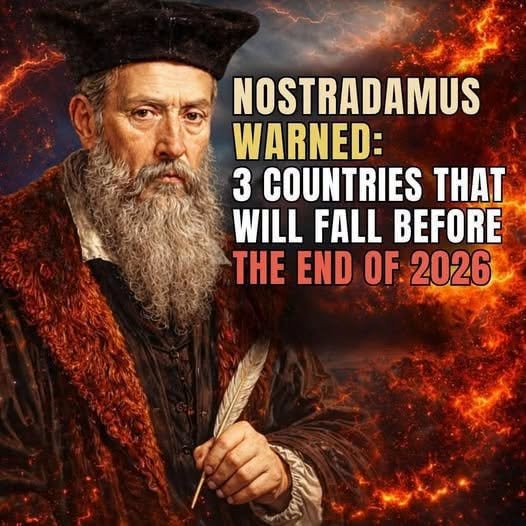
The warnings feel like sirens in the dark. As global tensions rise and familiar world powers face growing challenges, the mysterious writings of Nostradamus have once again captured public attention. His strange visions of conflict, decline, and upheaval seem eerily familiar to readers searching for clues about the future. A wounded eagle, a trapped bear, and an aging lion—three powerful symbols that some interpret as signs of a coming reckoning for the world’s greatest nations. But are these genuine prophecies, or are we simply seeing our present fears reflected in centuries-old words?
Nostradamus, the 16th-century French astrologer and author, became famous for his cryptic collection of verses known as Les Prophéties, published in 1555. His writings describe wars, disasters, political turmoil, and the rise and fall of powerful figures. Yet his language is often so vague and symbolic that it can be interpreted in countless ways. Rather than naming specific countries or providing clear dates, his verses rely on metaphors, unusual imagery, and ambiguous references that invite endless speculation.
Today, some enthusiasts associate the eagle with the United States, the bear with Russia, and the lion with Britain or another traditional symbol of power. They connect these images to geopolitical rivalries, economic uncertainty, military confrontations, and shifting alliances. As tensions dominate international headlines, the comparisons can appear convincing, particularly to those already worried about the direction of global affairs.
However, there is an important distinction between a prediction and an interpretation made after events have unfolded. Nostradamus did not consistently identify future nations in terms that can be independently verified, and there is no reliable evidence that these three animal symbols form a single, specific prophecy about the present-day world. Historians and skeptics have long pointed out that ambiguous verses can be fitted to many different events, especially when readers already know what happened.
The fascination nevertheless persists because Nostradamus rarely offers straightforward answers. His mysterious language allows every generation to discover its own anxieties within his words. During periods of war, economic instability, or political division, people naturally search for explanations that make uncertainty seem less overwhelming. Ancient prophecies offer a compelling narrative, transforming complicated events into a story with symbols, warnings, and an apparent destination.
But history offers a more practical lesson. Powerful nations can experience decline, political institutions can weaken, and international relationships can change dramatically. These developments are not necessarily evidence of supernatural prediction; they are recurring features of human history. Decisions made by leaders, the strength of institutions, economic conditions, technological change, and public opinion all influence how nations rise, struggle, and recover.
Perhaps the most unsettling aspect of the Nostradamus debate is not whether his visions will come true, but why so many people feel that they might. When the future appears uncertain, the promise of an ancient warning can feel reassuring, even when the warning itself remains unclear. It gives fear a shape and makes unpredictable events seem part of a larger design.
Ultimately, the eagle, bear, and lion may reveal more about modern anxieties than about any hidden forecast from the 16th century. Nostradamus’ verses can inspire curiosity and debate, but they should not be mistaken for reliable evidence of what lies ahead. The future is not a finished script waiting to be uncovered. It is shaped by human choices, political decisions, and the consequences of actions taken today.
And that leaves one question worth considering: Are we witnessing the fulfillment of an ancient prophecy, or are we searching the past for answers because the present feels increasingly unpredictable? The symbols may remain mysterious, but the choices that shape tomorrow belong to us.