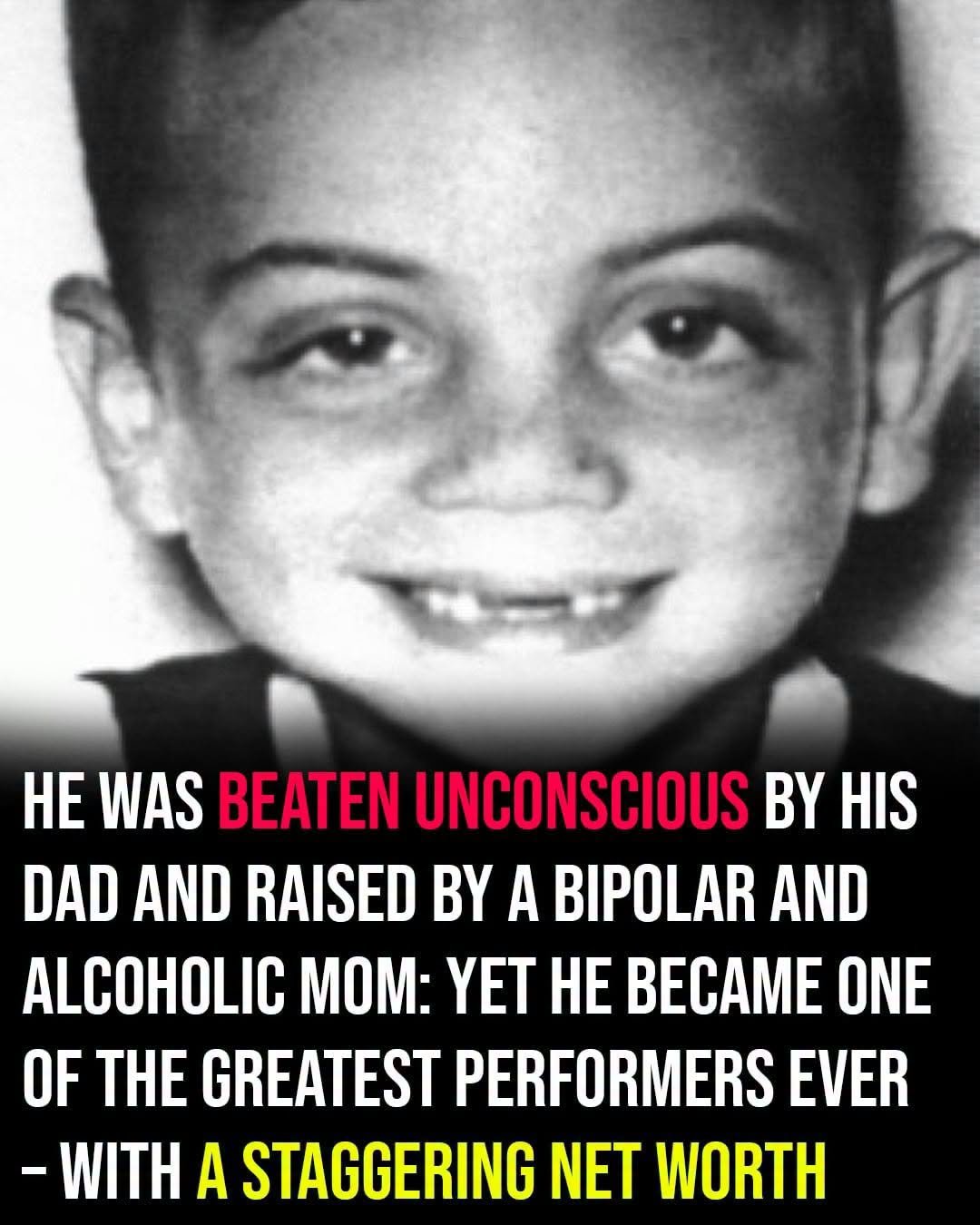
His voice filled stadiums. His songs became part of people’s lives. Yet behind the fame was a childhood marked by fear, poverty, family instability, and wounds that would follow him for decades.
Billy Joel’s early years were anything but easy. His father left the family when he was young, and Joel was raised largely by his mother, who struggled with serious emotional difficulties. He found refuge in music, beginning piano lessons as a child and eventually discovering that the instrument could give him something his home life could not: a place where he could express everything he could not put into words.
That refuge eventually became a career. Joel transformed personal pain, heartbreak, loneliness, and uncertainty into songs that connected with millions. From Piano Man to Scenes from an Italian Restaurant, Uptown Girl, and Vienna, his music often carried an emotional honesty that made listeners feel as though he were telling pieces of their own stories.
But success did not make his personal battles disappear. Joel struggled with alcohol, depression, difficult relationships, and periods when his personal life seemed to unravel beneath the pressure of extraordinary fame. He experienced multiple marriages and divorces, professional disappointments, and painful chapters that tested him long after he had become one of the world’s most recognizable musicians.
Still, he repeatedly found his way back to music.
For decades, the piano remained his constant companion. Even when life became complicated, performing gave him a way to reconnect with the person he had always been beneath the celebrity image.
In recent years, however, Joel’s health has forced him to step away from the stage. His touring schedule was postponed after doctors diagnosed him with normal pressure hydrocephalus (NPH), a neurological condition involving an abnormal buildup of cerebrospinal fluid that can affect walking, balance, thinking, and other functions. His recovery has required rehabilitation, turning the man once known for commanding massive arenas into a patient focused on something much simpler: getting stronger one day at a time.
His family has remained close throughout the difficult period. His daughters have spoken about his determination and described him as a fighter—a man who refuses to give up even when recovery is frustrating and slow.
For fans, the news has been painful because Joel’s music has accompanied generations through weddings, breakups, lonely nights, celebrations, and moments when people simply needed someone to understand what they were feeling.
But perhaps the most powerful part of Billy Joel’s story is not the sold-out concerts or awards.
It is the fact that the boy who once used a piano to escape the chaos of his childhood never stopped returning to those keys.
The world knows him as the Piano Man.
But behind that nickname is a man who spent his entire life turning pain into music—and somehow, again and again, finding a reason to keep playing.
Today, the stage may be quiet. His body may still be recovering. The future of touring may remain uncertain.
But his story is not finished.
Because after everything Billy Joel has survived, one thing has always remained true:
The music never left him.